Last updated November 25, 2026

Free written scope consultation - allowances, timeline, and change-order rules on paper before a single trade is scheduled
Choosing the Right Construction Brand: A Buyer’s Guide for Everett
A fiber cement siding brand that holds up in Phoenix can underperform in Everett if it’s installed and finished by someone who doesn’t understand sustained moisture. That’s the uncomfortable truth most showrooms skip past. The brand on the box matters less than whether it fits this climate, this house, and the maintenance you’re willing to live with for the next twenty years. Most homeowners never get that conversation, because the contractor in front of them carries one or two lines and recommends what’s on the shelf. This guide is the conversation you should be having: how to judge product claims against Pacific Northwest conditions, what actually differentiates brands in each category, and how to ask a contractor to justify a recommendation so you can tell a real answer from a script. By the end you’ll know how to choose materials for an Everett home the way a builder does.
Quick Answer
The right construction brand for an Everett project is the one whose real-world performance matches this region’s wet, mild, moss-prone climate and your maintenance tolerance, not the one with the biggest national ad budget. That means prioritizing moisture management, proper flashing and drainage compatibility, and finish durability over prestige, then confirming your contractor carries enough brands to recommend the correct product for the application rather than the one they always sell. A contractor who can explain why a specific product suits Everett conditions is worth more than any single logo.
Styles & brands we work with
- Kitchen remodeling
- Bathroom remodeling
- Home additions & ADU
- Roofing
- Windows & doors
- Driveway & pavers
- Fence
Table of Contents
- Why Brand Choice Matters More in Everett Than You Think
- How to Evaluate Brand Performance Claims Against Pacific Northwest Conditions
- Certified Installer vs. Proven Performer: What’s the Difference?
- Category by Category: What Actually Differentiates the Brands
- Why 50+ Brands Beats One Default Supplier
- How to Interrogate a Contractor’s Brand Recommendation
- Common Mistakes to Avoid
- Frequently Asked Questions
Why Brand Choice Matters More in Everett Than You Think
Everett sits in one of the wettest, most forgiving-then-unforgiving climates in the country. Winters are mild but relentlessly damp. The air holds moisture for months at a stretch. North-facing walls stay shaded and grow moss. Roofs shed rain instead of snow, which sounds easier until you realize that constant wetting and drying is what punishes a bad detail. A product engineered and marketed for a dry climate can look identical on a spec sheet and behave completely differently out here.
That’s why “we use top-quality brands” is close to meaningless as a statement. Top-quality according to whom, for what climate, installed how? A nationally advertised brand can be a superb choice in one application and a poor fit in another. The question worth asking isn’t which brand is best. It’s which brand is best for this wall, this roof, this cabinet run, in this weather.
Material choice also drives how much upkeep you sign up for. Some products are set-and-forget; others reward a homeowner who likes washing and resealing. Neither is wrong. But if you choose a finish that needs attention you don’t want to give, the brand’s reputation won’t save it. Homeowners in Everett who plan to stay put for a decade or more feel this most, because deferred upkeep shows up fast in a wet climate.
When you line up a real remodeling project, from home remodeling down to a single material swap, the brand decisions are the ones you live with longest. Structure and labor can be inspected and corrected. The siding on the wall is there until someone takes it down.
How to Evaluate Brand Performance Claims Against Pacific Northwest Conditions
Brand marketing is written for a national average, and the national average is nowhere near Everett. A manufacturer’s durability claim might hold up across the country yet still need careful installation and finishing to perform here. So you read the claim, then you ask the local question the claim doesn’t answer.
- Find the climate the claim was tested in. Ask whether the durability or warranty language assumes heavy freeze-thaw, desert UV, or constant damp. A brand proven in arid heat tells you little about moss and moisture.
- Check how moisture exits the assembly. Roofs, walls, and windows all need a way for water to drain and dry. The best brand in the world fails if it’s detailed so water can’t escape.
- Read the finish warranty, not just the product warranty. The substrate and the finish often have separate terms, and the finish is what fails first in a wet climate.
- Ask about UV in low-angle winter light. Everett’s sun sits low and rakes across south and west walls. Some finishes chalk or fade faster on those exposures.
- Confirm the flashing and trim systems match. A premium siding or window brand performs best with its own compatible components, not a mixed bag of parts.
What a good answer sounds like: “That product is solid here, but on your north wall we’d want to pay extra attention to ground clearance and the drainage plane, and we’d spec the finish that holds color in low sun.” What a sales answer sounds like: “It’s our best product, we install it on every house, everyone loves it.”
Certified Installer vs. Proven Performer: What’s the Difference?
There’s a real distinction between a contractor who uses a brand because they’re a certified installer and one who uses it because they’ve watched it perform across years of Everett weather. Certification means the manufacturer trained them and, in many cases, backs an extended warranty if they follow the spec. That’s valuable. It is not the same as judgment.
Years of watching a product handle our rain and moss tell you how it actually ages. Does that caulk line start failing on year three? Does the finish stay even on the shaded side? Does the fascia hold up on the wind-driven corner? A contractor who carries many product lines sees these patterns across brands and categories, and can tell you where the marketing holds and where it fudges. That perspective is what a customer actually wants when they ask which product to pick.
Our technicians have up to 15 years of experience, much of it in this climate, so the recommendation comes with that history behind it. When you’re reviewing a bid, ask each contractor how long they’ve personally installed and observed the product, and whether they’ve been back to service it. Certifications are the starting line, not the finish.
If your project touches exterior and interior, a single contractor watching both scopes over time builds that pattern knowledge faster than a specialist who only sees one trade. That’s part of the case for the Remodeling Everett approach and for full-scope work in general.
Category by Category: What Actually Differentiates the Brands
Roofing
In this climate, roof performance is about water management and ventilation, not just shingle brand. The major manufacturers, including GAF, CertainTeed, and Owens Corning, all make products that can perform well. The differentiators are the warranty terms, how the shingle handles constant damp, and whether the underlayment and flashing systems are the same manufacturer’s or a mix. Extended warranties often require the whole system, so brand coherence downstream matters. Ask which products are rated for low-slope sections if your roof has any, because those areas are where Everett roofs leak first.
Siding
James Hardie fiber cement is a recognized name, and for good reason, but in a wet climate it demands careful clearances, sealing at penetrations, and proper finishing. A brand that thrives in a dry market can require more of the installer here. Alongside siding, fence and rail lines like Jerith, Bufftech, and ActiveYards come into play for exterior projects, and each behaves differently in damp conditions. The real question for siding is how it sheds water and whether the trim and flashing match the cladding manufacturer’s system.
Windows and Doors
Therma-Tru and PGT are recognized names here for entry and impact-rated openings. The differentiators are the seals, the glazing units, and how the frames detail with your wall assembly to keep driven rain out. A window is only as good as its flashing and installation, so the brand’s performance claim means little without the install detail that backs it. Ask how the install manages water at the sill and head.
Decking and Hardscape
For outdoor living, hardscape pavers from Belgard, Unilock, Tremron, Techo-Bloc, and Cambridge Pavers all offer credible options. The real difference is in the base and drainage detail under the pavers, because freeze-thaw and constant wet shift an underprepared base quickly. Decking brand matters, but so does the joist spacing and ventilation beneath it, which determine mold risk in a damp climate.
Cabinetry and Countertops
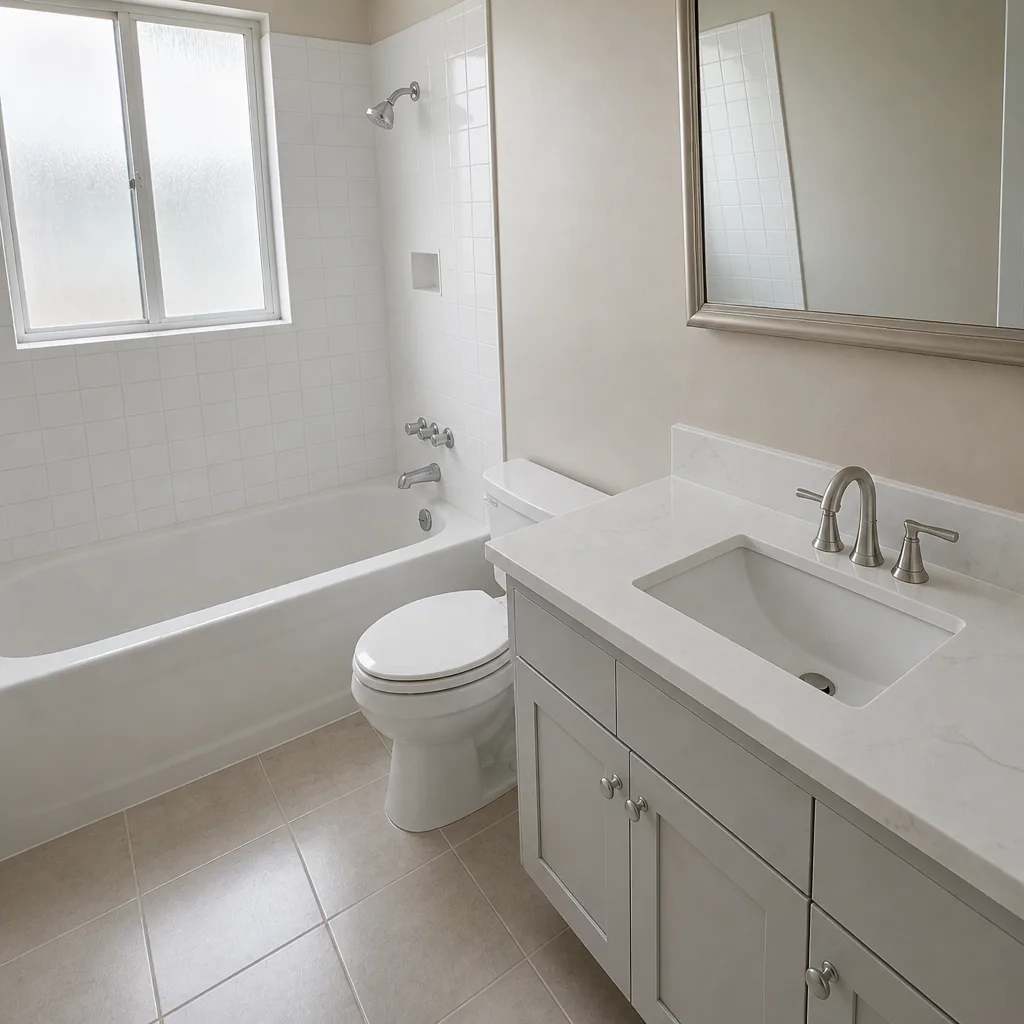
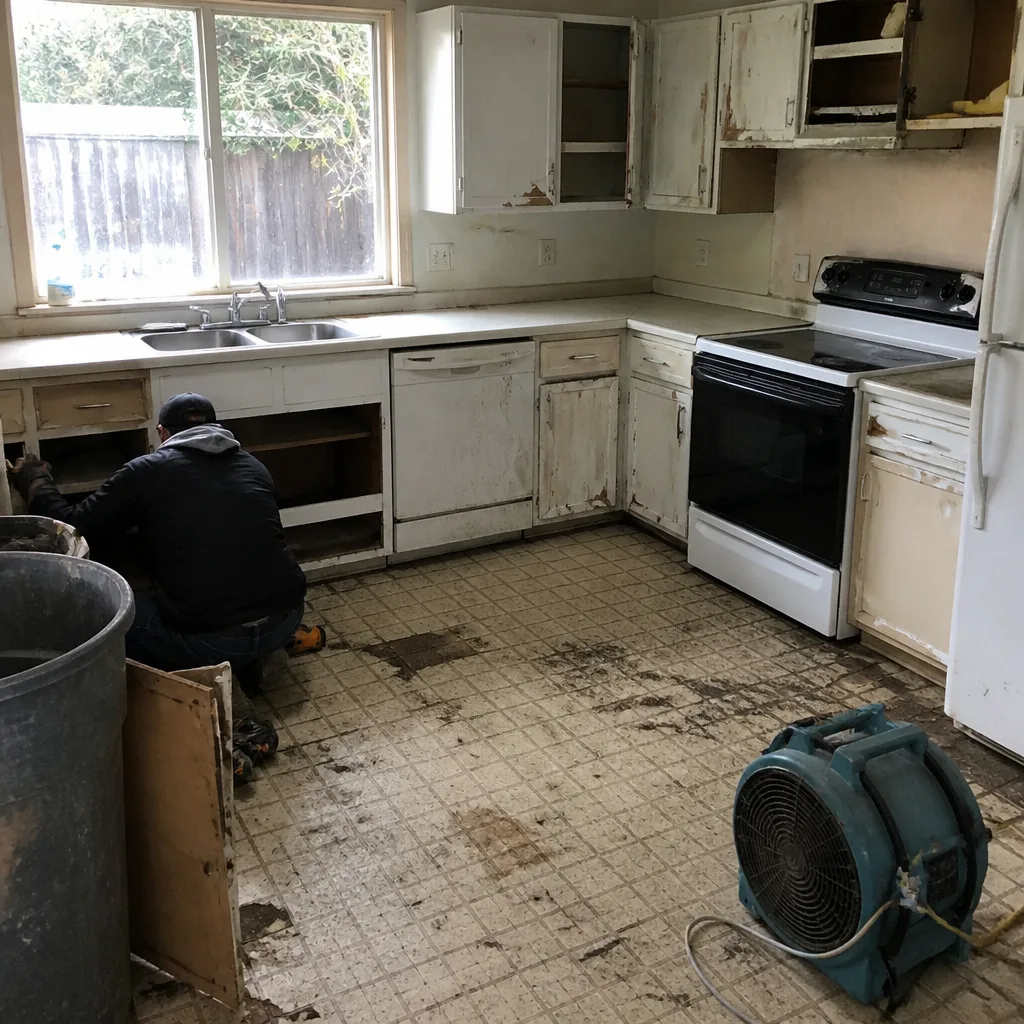
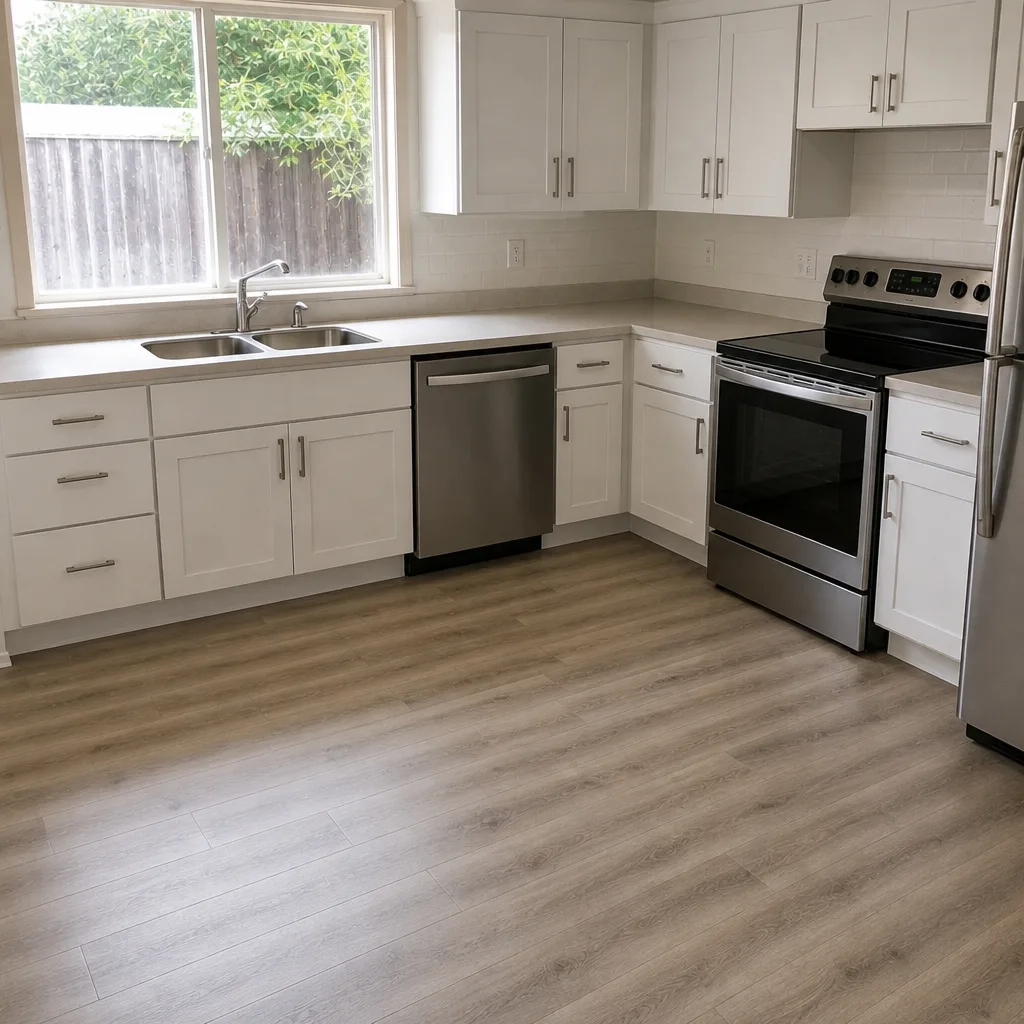
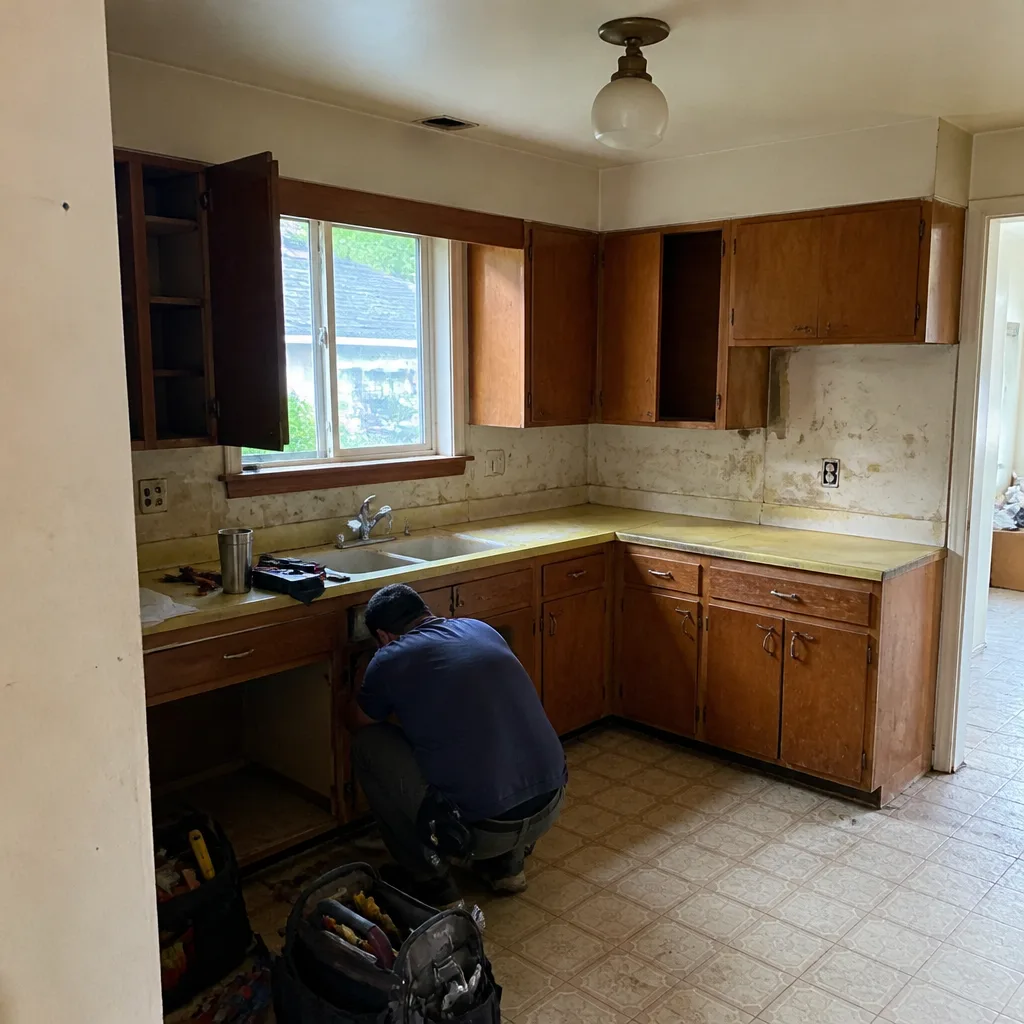
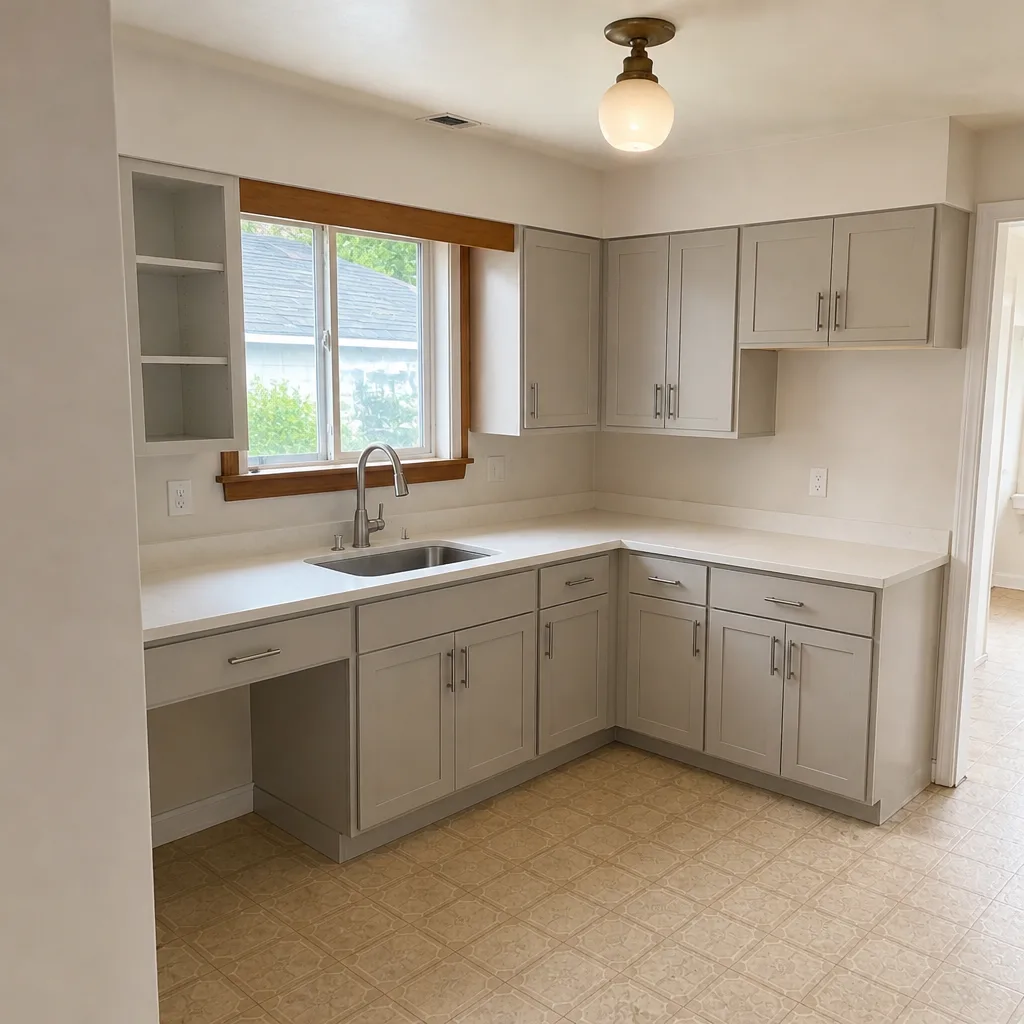
Cabinetry from KraftMaid and Wellborn, and countertops from Cambria, Silestone, and Caesarstone, offer real choice across semi-custom and custom tiers. The performance question indoors is less about weather and more about door and drawer construction, moisture resistance at the sink base, and how the drawer glides age. Three engineered stone options matter because you’re matching material to budget and aesthetic instead of accepting a single-brand quote. Our kitchen remodeling and bathroom remodeling projects work through these choices as part of the selection conversation.
Why 50+ Brands Beats One Default Supplier
A contractor carrying 50+ recognized product lines across cabinetry, countertops, plumbing fixtures, roofing, siding, windows, doors, fencing, hardscape pavers, and ADU structures can put the correct product in the application. A contractor locked into one or two suppliers can only back-engineer your project around what’s on the shelf. That’s the structural difference between an advisor and a reseller.
It shows up most on projects with mixed needs. A whole-home renovation might call for James Hardie siding on the exterior, GAF roofing, Therma-Tru doors, KraftMaid cabinets, Cambria counters, and Belgard pavers at the entry. A company working from one supplier network has to talk you out of some of that. A company that carries broad lines can match material to purpose.
It matters even more for ADU and prefab additions, where brands like Abodu, Dvele, Mighty Buildings, Boxabl, and Plant Prefab each approach the structure differently. Having multiple options lets you weigh cost, timeline, and finish against your lot and goals. That flexibility is the point. The full lineup exists so the household can choose what fits, from the first tile to the last coat of paint, with one contractor accountable across the scope.
How to Interrogate a Contractor’s Brand Recommendation
The most useful skill a homeowner can build is asking a contractor to defend a product choice. A thoughtful answer reveals judgment; a scripted one reveals a sales routine. Here’s how to tell them apart, question by question.
- “Why this product for this application, in this climate?” A good answer names the exposure and the risk. A weak answer covers the walk of a showroom display.
- “What are the alternatives, and why did you not choose them?” A contractor carrying many brands can name two or three and explain trade-offs. A contractor with one supplier can’t.
- “How does the install detail deal with water?” Look for flashing, drainage planes, and clearances, not brand prestige.
- “What have you had to come back and fix on this product?” Honest answers usually mention a finish, a caulk line, or a detail. Every product has weak points.
- “What does the warranty actually cover, and who stands behind it?” Product warranty and labor warranty are separate. Ask for both in writing.
- “Is this the product you recommend for maintenance tolerance I described?” If your priority is low maintenance, the answer should address that specifically.
A good answer is specific and mentions trade-offs. A sales-script answer repeats superlatives and avoids saying “this product has a real weakness here.” In our experience, the willingness to name a product’s downside is the clearest signal you’re getting judgment rather than a pitch.
Common Mistakes to Avoid
- Choosing by logo instead of application. A brand with a big reputation can be wrong for your specific wall or roof. Judge against the exposure, not the ad.
- Accepting a single-brand quote without comparison. If you’re only shown one countertop line, you can’t know whether the material fits your budget and aesthetic. Ask to see alternatives across the same tier.
- Ignoring the finish warranty. The substrate may last decades while the finish fades. In a damp climate, the finish is the first thing to fail.
- Mixing systems that aren’t designed to work together. Siding from one manufacturer, trim from another, flashing from a third can void the warranty and leak. Keep the water-management system coherent.
- Skipping the question about long-term performance. Ask what a product looks like after five years in Everett weather. That’s the test that matters.
- Letting a single-trade contractor dictate a whole-house brand. A roofer who only sells one product isn’t the right person to choose your windows and cabinetry too. Coordinate the scope.
- Ignoring maintenance tolerance. A great product you won’t maintain underperforms a good product you will. Match material to the upkeep you’ll actually do.
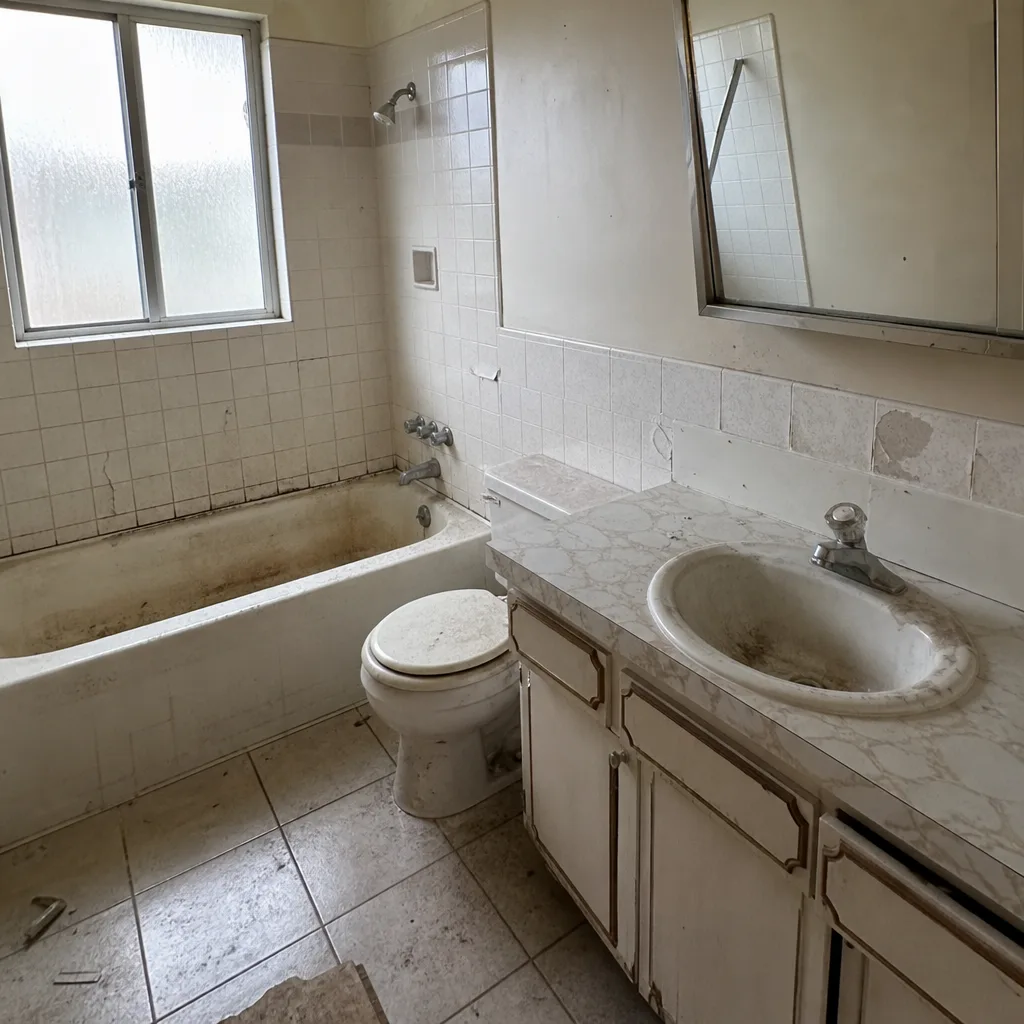
See the difference
 Before
 After
 Before
 After
 Before
 After
When to Call a Professional
Call a professional when a brand decision affects the building envelope: roofing, siding, windows, doors, or water management details. Those choices interact, and a wrong brand or a wrong install detail can be expensive to undo. Call when you’re weighing multiple material categories at once, like a kitchen and bath renovation that also refreshes siding. Call when you want actual alternatives rather than a single take-it-or-leave-it spec sheet. And call when a contractor recommendation feels scripted and you want a second opinion from someone who carries the full lineup. Remodeling Everett offers free estimates in Everett. Call (425) 366-8456 to talk through your project, compare material options, and get a written line-item quote. We answer 24/7. Fast dispatch from 7am to 7pm, Sunday through Friday. We’re closed on Saturday.
Frequently Asked Questions
There’s no single best brand; the right one depends on the application and this climate. Well-known names like James Hardie siding, GAF or CertainTeed roofing, Therma-Tru and PGT windows and doors, KraftMaid or Wellborn cabinetry, and Cambria, Silestone, or Caesarstone countertops are all credible choices when installed with the right water-management detail. The best product for your home is the one matched to its exposure and your maintenance tolerance. Call (425) 366-8456 for a free estimate and we’ll walk through options for your specific project.
Yes, and often more than the marketing suggests. The same product can perform well in a dry climate and need more careful installation and finishing here. Moisture management, drainage, flashing, and finish durability matter more than national reputation. Ask any contractor to explain how the product handles long damp periods and where water exits the assembly. Call (425) 366-8456 to talk it through.
Because a contractor with many product lines can recommend the right material for the job instead of the one they always sell. Broad selection across cabinetry, countertops, roofing, siding, windows, hardscape, and ADU structures means you get real alternatives, not a single spec sheet. Call (425) 366-8456 for a free estimate.
Certification means the manufacturer trained the installer and may back an extended warranty if the spec is followed. Experience means the contractor has watched the product age in real weather and can tell you where it holds up and where it doesn’t. The best recommendation comes from both. Call (425) 366-8456 to discuss your project.
You can mix brands, but keep connected building systems coherent. Siding, trim, and flashing should work together, ideally from a compatible system, or water can get behind the wall and void warranties. Independently, cabinet brands, countertop brands, and paver brands can each be chosen on their own merits. Call (425) 366-8456 and we’ll sort out which categories need to match.
Ask the contractor to explain the choice against your specific exposure, your maintenance tolerance, and the installed system around it. A good answer is specific and names trade-offs; a scripted answer repeats superlatives. Call (425) 366-8456 for a free estimate and a candid conversation about which products fit.
The Bottom Line
Choosing a construction brand isn’t about prestige. It’s about matching real-world performance to Everett’s climate and to the way you’ll actually live in and maintain the house. The most useful move you can make is to work with a contractor who carries enough product lines to give you honest alternatives, explains trade-offs, and keeps the connected building systems coherent. Do that, and the brand names become answers to a specific question rather than logos on a brochure. Every recommendation should come with a reason tied to your home and this weather.
Remodeling Everett offers free estimates. Call (425) 366-8456. We answer 24/7. Fast dispatch from 7am to 7pm, Sunday through Friday. We’re closed on Saturday.
Written by the team at Remodeling Everett.